


Dark Season
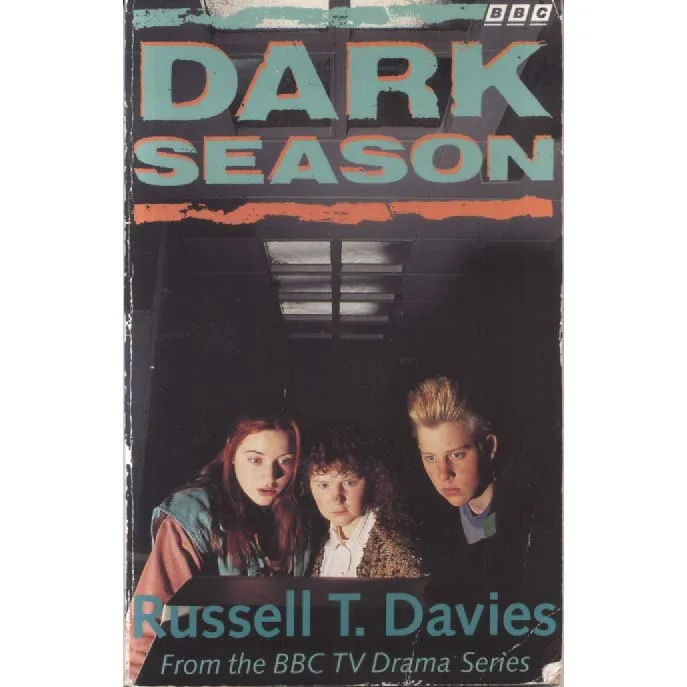
Publisher: BBC
Format: Paperback
ISBN: 9780563362654
Before he was a household name, a television institution, and one of the great architects of modern British screen storytelling, Russell T Davies was already doing something extremely suspicious: writing clever, unsettling, gleefully odd fiction for younger readers that treated children as though they might actually enjoy ideas, danger, atmosphere and a light seasoning of technological paranoia. Dark Season, published in 1991 by the BBC, is a marvellous specimen of that early energy — part school story, part sci-fi menace, part conspiracy thriller, and wholly unwilling to patronise its audience.
This is the sort of book that emerges from that glorious late-80s/early-90s zone of children’s television and tie-in fiction where adults had not yet fully decided that younger audiences needed everything softened, rounded off, and nutritionally balanced for emotional safety. Instead, Dark Season offers mystery, unease, strange happenings and the delicious possibility that something is very wrong indeed beneath the surface of ordinary life. Which, as generations of children have discovered, is exactly the right ingredient for a memorable story.
The title itself is excellent. Dark Season sounds ominous without being overblown. It suggests weather, mood, threat, and perhaps the arrival of something unnatural just beyond the edge of routine. It has that perfect chill of a phrase that could mean several things at once, all of them slightly worrying. A title like this does not promise gentle pony-based enrichment. It promises that somebody, somewhere, has tampered with normality, and that a group of intelligent young people may have to sort it out because the grown-ups are, as so often in fiction, distracted, compromised, or embarrassingly useless.
What makes Russell T Davies so distinctive, even this early, is the sense that his stories move with wit and confidence while never losing their emotional intelligence. He understands pace. He understands dialogue. He understands that young protagonists should be capable, funny, and properly engaged with the business of the plot rather than merely being ferried through it by adult exposition. That is one of the great pleasures of books like this: they trust the reader to keep up. They know that children and teenagers do not in fact require dullness in order to feel secure.
There is also something wonderfully period-specific about Dark Season. Published in 1991, it belongs to that fascinating pre-internet moment when technology in fiction still felt glamorous, faintly unknowable, and ripe for sinister misuse. Computers were no longer science-fiction props, but nor had they yet become boring household appliances full of passwords and software updates. They retained mystery. Threat. Aura. A book like this could exploit that brilliantly, making the machinery of modernity feel uncanny in a way that now reads as both nostalgic and oddly sharp.
And of course there is a quiet irony in encountering early Russell T Davies in this form. Readers coming backwards from his later fame may feel a particular pleasure in spotting the instincts already in place: the flair for youth-oriented drama, the sense of looming threat, the combination of intelligence and entertainment, the refusal to talk down to the audience. It is always satisfying to find the seeds of later greatness in an earlier work, especially when the result is not merely “interesting juvenilia” but a genuinely enjoyable story in its own right.
The BBC publication adds another layer of charm. There was once something wonderfully confident about BBC books and programme tie-ins — a sense that children’s drama, speculative weirdness, and educationally adjacent peril could all coexist happily under one institutional roof. It feels now like a relic of a more adventurous broadcasting culture, when someone presumably looked at a dark, brainy children’s serial and thought, quite sensibly, “Yes, let’s also make this a book.”
This Good copy, sold by Crappy Old Books, has the pleasingly solid condition of a book that may well have been read by exactly the sort of sharp young reader it was written for, and has come through the decades ready to do the job again. A good copy of Dark Season feels right: presentable, readable, and just weathered enough to suggest a life beyond mere shelving.
A cracking find for readers of vintage children’s fiction, BBC-related curios, early Russell T Davies, and anyone who enjoys a smart young-person’s story with menace, brains and atmosphere, Dark Season is a reminder that the best children’s fiction is never merely childish. It is strange, tense, funny, inventive and just dark enough to feel dangerous — which is precisely why it lasts.
Keep browsing: See more Science-Fiction books Other books by Russell T Davies
